
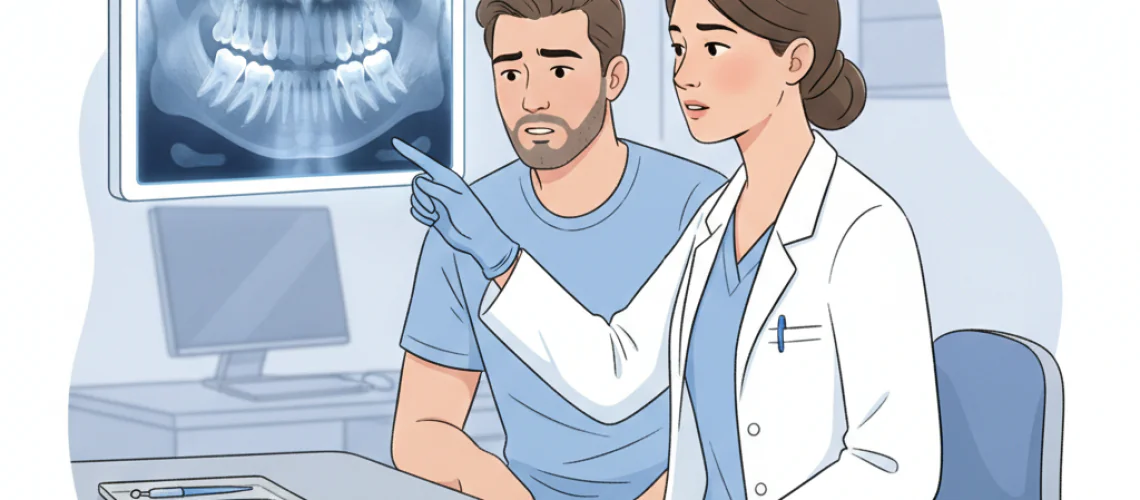
Your dentist pulls up your X-ray, points to the back of your jaw and says, "See that? It's lying on its side." When your wisdom teeth are sideways, it's easy to feel uneasy, especially if you've already been noticing pressure or soreness back there. At New Smile Now in Greensburg and Monroeville, PA, our oral surgeons see sideways wisdom teeth all the time.
Here's what it means, the symptoms to watch for and what treatment usually looks like.
How Wisdom Teeth End Up Sideways
Wisdom teeth, or third molars, are the last teeth to form, usually in the late teens or early twenties. If the jaw doesn't have enough room, they can't come straight up. Instead, they may tilt toward the molar in front, lean back toward the throat or lie completely flat under the gums.
A tooth that's stuck like this is called impacted. Sideways impacted teeth can press against the roots of the molar next to them, trap food and bacteria and make it hard to keep the area clean.
Symptoms of Sideways Wisdom Teeth
Some sideways wisdom teeth cause no pain at first. Others make themselves known with tender or swollen gums near the back of the mouth, a dull ache or jaw stiffness, trouble opening wide or a bad taste that keeps coming back. Some people notice headaches, earaches or a sore throat on the same side.
Even without pain, a sideways tooth can quietly cause decay or gum problems on the molar next to it, which is why regular X-rays matter.
How Sideways Wisdom Teeth Are Diagnosed
Diagnosis starts with an exam and imaging. Dental X-rays show the angle of each wisdom tooth and how close it sits to the neighboring teeth. For deeper or more complex cases, 3D cone beam imaging gives a clearer picture of the roots and the nerve that runs through the lower jaw.
That information helps the surgeon plan the gentlest, most efficient way to remove the tooth, with fewer surprises on surgery day.
Treatment Options for Sideways Wisdom Teeth
Most sideways wisdom teeth are best treated by removing them. Taking them out relieves pain and protects the teeth around them. In some cases, when a tooth isn't causing problems yet, your surgeon may suggest keeping an eye on it with regular X-rays.
At New Smile Now, extractions are done with anesthesia options that range from local numbing to IV sedation and general anesthesia, all in our office. We also offer advanced healing therapies, like platelet-rich fibrin, that use your own blood to support faster healing.
Preparing for Wisdom Teeth Extraction
Preparation is simple but important. At your consultation, we'll go over your X-rays, talk through anesthesia options, and give you instructions on eating and drinking before surgery. Plan for a ride home and a few days of rest. You can also read our top things to know before getting a tooth extraction.
Recovering After Surgery
Swelling and soreness are normal for the first few days, and they usually peak around day two or three. Ice, prescribed or recommended pain relievers, and soft foods help a lot. Keep your mouth clean with gentle rinses and skip straws while the sockets heal. Here's more on what to expect after a tooth extraction.
Most people are back to school or work within a few days and feel close to normal within a week or two. Plan your surgery around a quieter stretch on your calendar if you can, like a long weekend or a school break, so you can rest without feeling rushed.
Risks and Possible Complications
Every surgery carries some risk. With wisdom teeth, that can include infection, dry socket or, rarely, irritation of the nerve in the lower jaw. Careful planning with 3D imaging and experienced surgical care keeps those risks low, and following your aftercare instructions matters too.
Why Waiting Can Make Things Harder
Wisdom tooth roots keep growing into the early twenties, and the bone around them gets denser with age. Removing a sideways tooth earlier usually means an easier procedure and a quicker recovery than waiting until it causes a crisis.
Choosing the Right Oral Surgery Practice
When a tooth is impacted, experience matters. New Smile Now is an oral and maxillofacial surgery practice, so extractions, implants and jaw surgery are what we do every day. Our focus on comfort, in-office anesthesia, and healing support helps you feel cared for from start to finish.
FAQs About Wisdom Teeth Are Sideways
What are the symptoms of impacted wisdom teeth?
Pain, swelling, gum tenderness, and trouble opening your mouth are common, though some people have no symptoms at first.
How is the extraction performed?
The area is numbed, or you're sedated, then the surgeon removes the tooth, sometimes in sections, and gives you detailed aftercare instructions.
What should I do after surgery?
Take your medicine as directed, stick to soft foods, keep the area clean, and go to your follow-up visit.
Are there long-term effects of having wisdom teeth removed?
Most people simply notice fewer problems in the back of the mouth and an easier time keeping their teeth clean.
Why choose New Smile Now?
Our oral surgeons focus on surgery every day and offer in-office anesthesia and advanced healing options for a more comfortable experience.
Relief Is Closer Than You Think
You don't have to keep putting up with the pressure and worry. Schedule a consultation at New Smile Now, read up on what to expect before, during, and after a tooth extraction and let our team help when your wisdom teeth are sideways.