
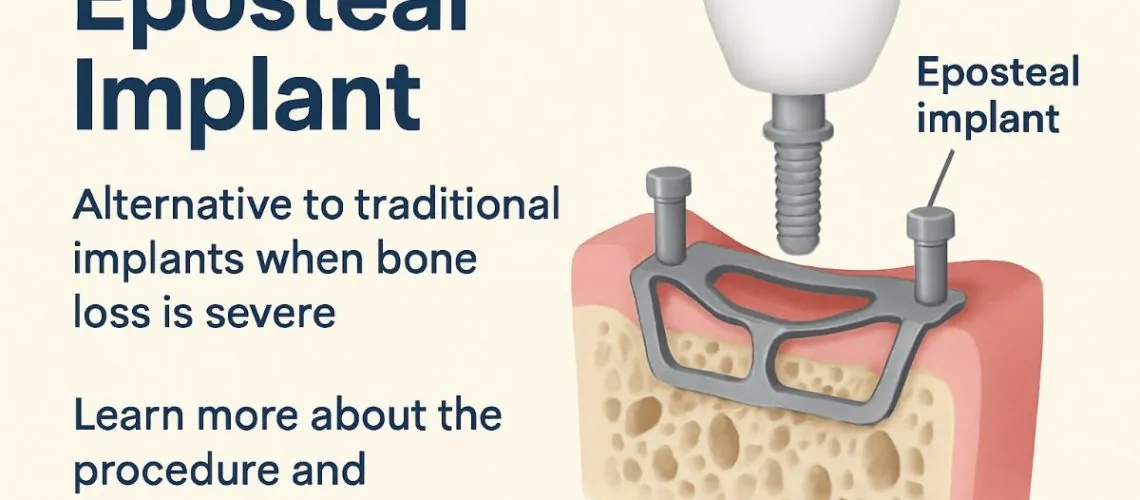
An eposteal implant is a type of dental implant used when traditional implants can't be placed safely. If you have severe jawbone loss, a shallow ridge, or anatomy that makes endosteal implants unsuitable, an eposteal implant may be an option. Oral surgeons place the implant framework and abutments, then work with your general dentist to finish the crown, bridge, or denture that sits on top.
This guide explains what an eposteal implant is, how the procedure works, what to expect during recovery, and how oral surgeons coordinate with general dentists. It will help you decide whether to discuss this option with a specialist.
What Is An Eposteal Implant?
An eposteal implant (sometimes called a subperiosteal implant) is a metal framework that sits on top of the jawbone but under the gum tissue. Unlike endosteal implants, which are posts placed inside the bone, an eposteal implant rests above the bone for patients who lack enough healthy bone for traditional implants.
When it’s used:
- Significant bone loss in the jaw that prevents safe placement of endosteal implants
- A ridge that is too shallow or narrow for screw-type implants
- Anatomy or prior surgeries that make placing standard implants risky
Quick comparison to endosteal implants:
- Endosteal: Titanium posts placed into the jawbone. Most common and ideal when bone volume is adequate.
- Eposteal: Custom metal framework sits on top of the bone under the gums. Used when bone volume is limited and bone grafting is not feasible or wanted.
How The Eposteal Implant Procedure Works
What the oral surgeon places
The oral surgeon fits a custom metal framework (the eposteal implant) onto the jawbone beneath the gum tissue. The framework includes posts or abutments that protrude through the gums. The surgeon’s role is to:
- Assess bone and soft tissue to confirm the implant is appropriate
- Place the metal framework so it rests securely on the bone
- Attach abutments that will support the final restoration
Important: the oral surgeon does not place the final crown, bridge, or denture. The surgeon installs the post and abutment, creates a stable base, and then coordinates with your general dentist for the prosthetic work.
Working with your general dentist for the restoration
After the surgeon places the framework and abutments, your general dentist makes the final restoration. That can be a fixed bridge, a removable overdenture, or individual crowns attached to the abutments. The team approach looks like this:
- Surgeon: prepares the mouth, places the eposteal framework and abutments
- Healing period: gums heal and soft tissue adapts around the abutments
- General dentist: takes impressions, designs, and places the final prosthetic
Recovery, Risks, And What To Expect
Typical recovery timeline:
- First 48–72 hours: swelling and soreness are most noticeable
- 1–2 weeks: stitches and major discomfort settle
- 4–8 weeks: soft tissue heals around abutments; final restoration timing varies
Common post-op instructions:
- Take prescribed pain medicine and antibiotics as directed
- Use cold packs the first 24 hours to reduce swelling
- Eat soft foods for several days to a few weeks depending on comfort
- Keep the area clean with gentle rinses and the oral hygiene plan your surgeon gives you
Risks and signs of complications to call your surgeon about:
- Heavy bleeding that doesn’t stop with pressure
- Fever, increasing redness, or pus at the surgical site (possible infection)
- Severe or worsening pain not helped by medication
- Loose framework or shifting abutments
Short FAQ:
- Healing time before restoration: Many patients wait several weeks for soft tissue healing; exact time depends on your case and surgeon’s plan.
- Who pays for what: Insurance coverage varies. Oral surgery and the framework placement are billed by the surgeon; the prosthetic (crowns/bridges/dentures) is billed by your general dentist. Verify coverage with both offices and your insurer.
- Are bone grafts needed: Eposteal implants are often chosen because bone grafting is not feasible. Your surgeon will recommend grafts only if they improve the long-term outcome.
Other Oral Surgery Services
Oral surgeons who place eposteal implants typically offer other procedures too, like extractions and wisdom tooth removal. For wisdom teeth and general oral surgery care, you can speak with Dr. McCloy, who handles routine and complex extractions with standard post-op care.
Choosing An Oral Surgeon For Your Eposteal Implant
When considering an eposteal implant, choose a surgeon who understands both the surgical placement and the coordination needed with your general dentist. Dr. Halusic places the implant framework and abutments and works closely with general dentists to make sure the final prosthetic fits and functions well. A consult lets you review X-rays, treatment options, costs, and timing.
If you think an eposteal implant could solve your dental challenges, schedule a consultation to discuss whether this option fits your needs and to learn the next steps.