
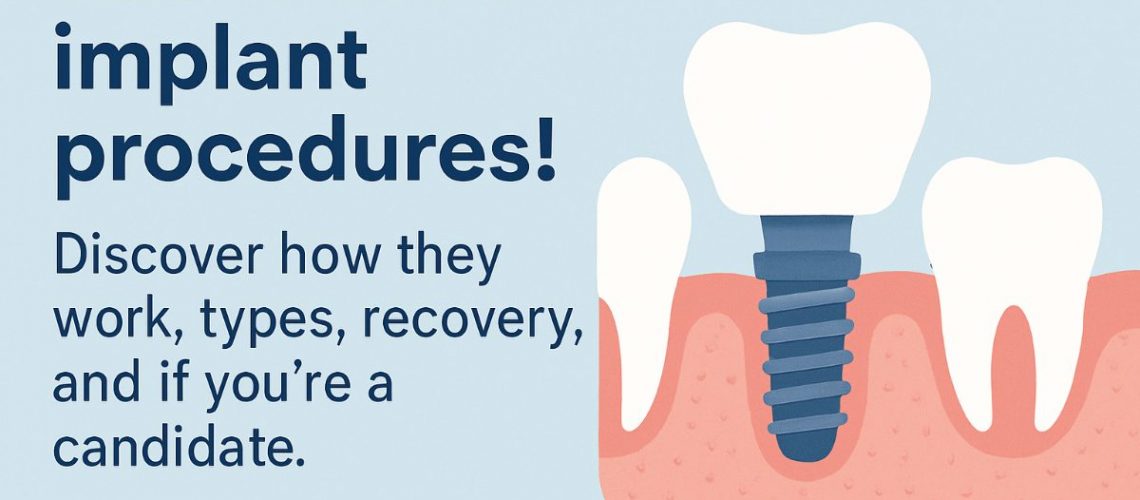
Implant procedures are surgical treatments that replace missing teeth with titanium posts and finished prosthetic teeth. Many patients choose implant procedures for long-term function, better chewing, and a natural look. Implant procedures include a surgical phase to place the posts and a separate restoration phase where crowns, bridges, or dentures are attached.
How Implant Procedures Work
Implant procedures begin with planning and imaging to map bone and nerves. An oral surgeon places titanium implant posts into the jawbone to act as artificial tooth roots. After healing, a restorative dentist attaches the final prosthetic.
The Implant Post And Abutment
The oral surgeon places a titanium post into the jawbone, and an abutment connects the post to the visible tooth. Over weeks to months the bone integrates with the post (osseointegration), making the implant stable. Dr. Edward Halusic leads implant placements and uses CT-guided planning to improve accuracy for these steps.
Restoration By Your General Dentist
Once the implant and abutment are healed, your general or restorative dentist makes and places the crown, bridge, or denture. This coordination between the surgeon and your dentist ensures proper fit, bite, and appearance.
Common Types Of Implant Procedures
Single-Tooth Implants
Single-tooth implants replace one missing tooth with an implant and a ceramic crown. They preserve adjacent teeth and restore normal chewing and appearance.
Implant-Supported Dentures & Bridges
Multiple implants can anchor a fixed bridge or stabilize removable dentures. Implant-supported dentures reduce slipping and improve chewing compared with traditional dentures.
All-On-4 And Zygomatic Implants
Full-arch solutions like All-on-4 use four implants to support a whole arch of teeth, often avoiding bone grafts. Zygomatic implants anchor into the cheekbone for patients with severe upper jaw bone loss and allow reconstruction when standard implants aren’t possible.
Who Is A Good Candidate For Implant Procedures
Good candidates have adequate bone volume, healthy gums, and controlled medical conditions. Factors that affect candidacy include:
- Poor bone volume may require bone grafting before implants.
- Active gum disease should be treated first.
- Systemic health — uncontrolled diabetes or heavy smoking — can raise risks and slow healing.
A thorough exam and CT imaging determine whether bone grafting or alternative approaches are needed.
What To Expect During And After Implant Procedures
Anesthesia And Comfort
Implant procedures can be done with local anesthesia, oral sedation, or IV sedation for patient comfort. New Smile Now offers full anesthesia options so patients remain comfortable during surgery.
Recovery Timeline And Aftercare
Initial healing takes 1–2 weeks for soft tissues. Osseointegration commonly takes 3–6 months before final restoration. Aftercare includes short-term pain control, soft-food guidelines, careful oral hygiene, and scheduled follow-up visits to monitor healing.
Risks And How They’re Managed
Risks include infection, nerve irritation, sinus issues, and implant failure. Surgeons reduce risks with careful planning, sterile technique, and CT-guided placement. If complications occur, timely treatment and monitoring usually resolve problems.
Costs, Timeline, And Coordination Of Care
Costs vary by the type of implant procedure, need for grafting, number of implants, and materials. The typical timeline includes consultation and imaging, surgery to place posts, healing, and a final restoration appointment. Clear communication between the oral surgeon and your restorative dentist is essential for implant procedures to achieve the best functional and aesthetic outcome.
When Implants Aren’t The Best Option
Alternatives include fixed bridges and removable dentures when medical issues or bone conditions rule out implants. Some patients prefer less invasive options or need medical clearance before implant procedures.
Wisdom Teeth And Other Oral Surgery (When Relevant)
Wisdom teeth extraction and many other oral surgeries differ from implant procedures because they remove teeth rather than place artificial roots. For wisdom teeth and related oral surgery care, patients are treated by Dr. Ryan McCloy, who focuses on safe extractions and post-op recovery.
About New Smile Now And The Implant Team
New Smile Now, Home of The Facial Surgery Center, serves Greensburg and Monroeville with advanced oral and facial surgery and implant care. The team includes Dr. Edward Halusic, Dr. Christian Moore, and Dr. Troy Eans. The practice uses CT-guided planning, All-on-4 solutions, zygomatic implants, digital dentistry, and full anesthesia to support complex implant procedures while prioritizing safety and comfort.
How To Get Started With Implant Procedures
To start, bring any recent dental records and imaging to your consult, or schedule a CT scan if needed. Expect a clinical exam, review of medical history, and a treatment plan outlining costs and timeline. Call New Smile Now to schedule an evaluation and learn whether implant procedures are right for you.